Athens County Feels Tremors from 3.5 Magnitude Earthquake

The United States Geological Survey has confirmed that Athens County has experienced an earthquake.  At 12:59:40 PM an earth quake registering a magnitude of 3.5 was recorded 4 kilometers ESE of Nelsonville.  Athens County 9-1-1 has received numerous calls from around the county reporting the event but no damage has been reported at this time.  Do not call public safety telephone numbers about the event unless you are report damages.

An earthquake in Ohio??  Yes, Ohio is in a seismic zone.  According to the Ohio Seismic Network, “Southeastern Ohio has been the site of many earthquakes since 1776. The 1776 event, recorded by a Moravian missionary, has a very uncertain location. Earthquakes in 1901 near Portsmouth (Scioto County), in 1926 near Pomeroy (Meigs County), and in 1952 near Crooksville (Perry County) caused minor to moderate damage.”

This is a good reminder to be prepared for any type of disaster. Every spring and fall the county experiences flooding.  Winter brings an assortment of events that can affect our county in a dramatic way.  We need to be prepared at any time to take care of ourselves and family.  Get a kit, make a plan, be informed!!

GET A KIT – You may need to survive on your own after an emergency. This means having your own food, water, and other supplies in sufficient quantity to last for at least three days. Local officials and relief workers will be on the scene after a disaster, but they cannot reach everyone immediately. You could get help in hours, or it might take days. In addition, basic services such as electricity, gas, water, sewage treatment, and telephones may be cut off for days, or even a week or longer.

MAKE A PLAN – Your family may not be together when disaster strikes, so it is important to plan in advance: how you will contact one another; how you will get back together; and what you will do in different situations.

BE INFORMED – Learn more about the potential emergencies that could happen where you live and the appropriate way to respond to them.   In addition, learn about the emergency plans that have been established in your area by your state and local government.

Emergency preparedness is no longer the sole concern of earthquake prone Californians and those who live in the part of the country known as “Tornado Alley.” For Americans, preparedness must now account for man-made disasters as well as natural ones. Knowing what to do during an emergency is an important part of being prepared and may make all the difference when seconds count.

More emergency preparedness information is available by contacting the Athens County Emergency Management Agency at (740) 594-2261 or on the internet at http://www.athenscountyema.org.

Additional information is available at;
http://www.ema.ohio.gov
http://www.ready.gov
http://www.fema.gov

2013 NELSONVILLE / YORK CHRISTMAS BASKET QUESTIONS & ANSWERS

NFD christmas-food-baskets

2013 CHRISTMAS BASKET Q & A

Q:         When can I pick-up an application?

A:         Applications will be available on Friday, November 29th at 8:00 a.m.

Q:         Where can I pick-up an application?

A:         Applications are available at the Fire Department and the Water Office

Q:         When do I have to have the application turned in?

A:         Applications are due in Saturday, December 7th by 12 midnight

Q:         Where do I have to live for a Christmas Basket?

A:         Only persons living in the City of Nelsonville or York Township are eligible for a Christmas Basket.  A Nelsonville mailing address does not mean you live in Nelsonville

Q:         Can I have an application filled out by calling on the telephone?

A:         No, applications cannot be accepted over the telephone

Q:         How many applications can I pick-up?

A:         Only 2 applications can be picked up at anytime

Q:         Do I need any ID, or other paper work to complete an application?

A:         No

Q:         Does filling out an application guarantee you a Christmas Basket?

A:         No, Only approved Christmas Baskets will be delivered.  The number of basket delivered will be based on the amount of money raised.

Q:         When will the Christmas Basket be delivered?

A:         Approved Christmas baskets will be delivered on Saturday, December 21st, between 8:00 a.m. and 2:00 p.m.

Q:         Do I have to be home to receive an approved Christmas Basket?

A:       Yes, Christmas Baskets will not be left at house without anyone home.  Basket will also not be left at neighbors houses. If no person is home at an approved address, the delivery crew will try one more time later in the day.

Q:         Can I pick-up my basket if I will not be home?

A:         No, approved basket must be delivered to the approved address on the application

Q:         Do the Christmas Basket include any gifts for children?

A:         No, the Christmas Baskets are food baskets only

Nelsonville & York Township FD launch 65th Annual Christmas food basket program

NFD christmas-food-baskets

The Nelsonville Volunteer Fire Department in cooperation with the York Township Volunteer Fire Department will be holding their 65th annual Christmas food basket program.  The program started in 1948 when firefighters distributed 14 food baskets.  For this 65th year firefighters expect to distribute over 200 food baskets at a cost of more than $6,000.  The Parade of The Hills Festival held annually in Nelsonville in late August was established to assist in raising funds for the program.  Funds are still raised by the festival and by soliciting local businesses and groups for their support of the program.

Applications for Christmas food baskets will be available on Friday, November 29th, and must be returned by Saturday, December 7th.  Applications will be available at the Nelsonville water office and the Nelsonville Fire Department. Approved Baskets will be delivered on Saturday, December 21st.  Only residents of Nelsonville and York Township are eligible to apply for a basket.  Persons having questions may call (740) 753-1244.

A SEVERE THUNDERSTORM WARNING HAS BEEN ISSUED FOR WESTERN ATHENS COUNTY UNTIL 830PM THIS EVENING. SEEK SHELTER!!

Severe Thunderstorm Warning

A SEVERE THUNDERSTORM WARNING HAS BEEN ISSUED FOR WESTERN ATHENS COUNTY UNTIL 830PM THIS EVENING.

REMEMBER, A SEVERE THUNDERSTORM WARNING MEANS THAT SEVERE THUNDERSTORM HAS BEEN SPOTTED.  SEVERE THUNDERSTORMS ARE CAPABLE OF PRODUCING HAIL ¾ INCH OR LARGER IN DIAMETER AND OR WINDS EQUAL TO OR EXCEED ING 58 MILES AN HOUR.  PERSONS IN THESE AREAS SHOULD SEEK SHELTER IMMEDIATELY.  LISTEN FOR LATER STATEMENTS. SEVERE THUNDERSTORMS CAN AND OCCASIONALLY DO PRODUCE TORNADOES.

STAY TUNED TO NOAA WEATHER RADIO, LOCAL TV, RADIO OR YOUR CABLE TELEVISION PROVIDER FOR LATER STATEMENTS.

ATHENS CO IS UNDER A TORNADO WATCH UNTIL MIDNIGHT TONIGHT SUN 11/17, WATCH FOR CHANGING WEATHER CONDITIONS!

Tornado Watch

ATHENS CO IS UNDER A TORNADO WATCH UNTIL MIDNIGHT TONIGHT SUN 11/17, WATCH FOR CHANGING WEATHER CONDITIONS!

REMEMBER, A TORNADO WATCH MEANS CONDITIONS ARE FAVORABLE FOR TORNADOES AND SEVERE THUNDERSTORMS IN AND CLOSE TO THE WATCH AREA.  PERSONS IN THESE AREAS SHOULD BE ON THE LOOKOUT FOR THREATENING WEATHER CONDITIONS AND LISTEN FOR LATER STATEMENTS AND POSSIBLE WARNINGS.

STAY TUNED TO NOAA WEATHER RADIO, LOCAL TV, RADIO OR YOUR CABLE TELEVISION PROVIDER FOR LATER STATEMENTS AND POSSIBLE WARNINGS.

ATHENS CO WIND ADVISORY FROM 2PM SUN 11/17 TO 6AM MON 11/18, WATCH FOR CHANGING WEATHER CONDITIONS!

Wind Advisory

WIND ADVISORY IN EFFECT FOR ATHENS COUNTY FROM 2PM SUNDAY 11/17 TO 6AM MONDAY 11/18.

WINDS – SOUTH OR SOUTHWEST AT 15 TO 20 MPH WITH GUSTS UP TO 50 MPH, SHIFTING TO WEST OVERNIGHT. A BRIEF STRONGER GUST COULD OCCUR IN FAST MOVING SHOWERS OR THUNDERSTORMS.

TIMING – THE STRONGEST GUSTS ARE EXPECTED OVERNIGHT TONIGHT FROM A SOUTHWEST OR WEST DIRECTION.

IMPACTS – FALLEN TREE BRANCHES COULD DAMAGE BUILDINGS OR CAUSE POWER INTERRUPTIONS. PROPERTY DAMAGE IS ALSO POSSIBLE TO SUCH ITEMS AS ROOFING, AWNINGS AND CARPORTS. CROSS WINDS CAN MAKE

DRIVING DIFFICULT, ESPECIALLY FOR HIGH PROFILE VEHICLES.

CONSTRUCTION SITES ARE ALSO VULNERABLE TO DAMAGE.

PRECAUTIONARY/PREPAREDNESS ACTIONS:
A WIND ADVISORY MEANS THAT WIND GUSTS OF AT LEAST 46 MPH ARE EXPECTED. THESE WINDS CAN CAUSE PROPERTY DAMAGE.  TAKE EXTRA PRECAUTIONS, SUCH AS SECURING LOOSE OBJECTS AROUND YOUR PROPERTY. STRONG WINDS COULD CAUSE TREE DAMAGE AND POWER OUTAGES.

AVOID PARKING VEHICLES OVERNIGHT WITHIN REACH OF VULNERABLE TREES. MOTORISTS ON THE ROAD CAN ENCOUNTER SUDDEN CROSS WINDS.

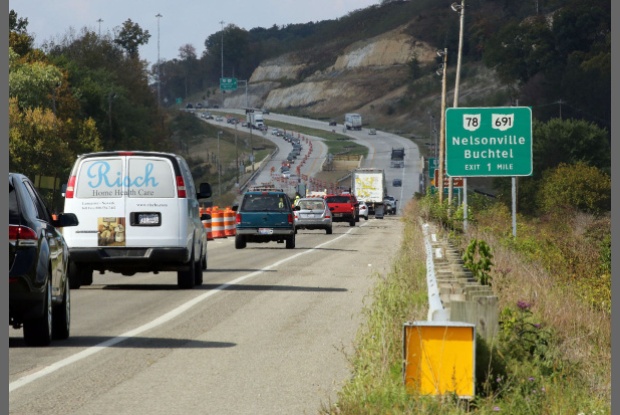
Hocking Pkwy at SR 691 CLOSED 4 days starting Wed, 11/20/13 for SR 691 re-alignment. Please avoid this area

Nelso Road Closed

The City of Nelsonville announces that Hocking Parkway at State Route 691 will be closed for (4) four days starting Wednesday, November 20, 2013.  The roadway is being closed to complete work that is needed to tie Hocking Parkway into the new State Route 691 alignment. Traffic for Hocking College will need to use the Northern entrance into Hocking College during this closure.  Travelers are asked to avoid traveling in this area.  This road closure time period is subject to weather delays and may be extended if needed.

Winter Driving Safety Tips

http://youtu.be/m5LkTkW3TDY

Severe weather can be both frightening and dangerous for automobile travel. Motorists should know the safety rules for dealing with winter road emergencies. Remember be cautious while driving in adverse weather.

Recommended winter driving tips:

Avoid driving while you’re fatigued. Getting the proper amount of rest before taking on winter weather tasks reduces driving risks.

Never warm up a vehicle in an enclosed area, such as a garage.

Make certain your tires are properly inflated.

Never mix radial tires with other tire types.

Keep your gas tank at least half full to avoid gas line freeze-up.

If possible, avoid using your parking brake in cold, rainy and snowy weather.

Do not use cruise control when driving on any slippery surface (wet, ice, sand).

Always look and steer where you want to go.

Use your seat belt every time you get into your vehicle.


Tips for long-distance winter trips:

Watch weather reports prior to a long-distance drive or before driving in isolated areas. Delay trips when especially bad weather is expected. If you must leave, let others know your route, destination and estimated time of arrival.

Always make sure your vehicle is in peak operating condition by having it inspected by an Approved Auto Repair facility.

Keep at least half a tank of gasoline in your vehicle at all times.

Pack a cellular telephone, blankets, gloves, hats, food, water and any needed medication in your vehicle.

If you become snow-bound, stay with your vehicle. It provides temporary shelter and makes it easier for rescuers to locate you. Don’t try to walk in a severe storm. It’s easy to lose sight of your vehicle in blowing snow and become lost.

Don’t over exert yourself if you try to push or dig your vehicle out of the snow.

Tie a brightly colored cloth to the antenna or place a cloth at the top of a rolled up window to signal distress. At night, keep the dome light on if possible. It only uses a small amount of electricity and will make it easier for rescuers to find you.

Make sure the exhaust pipe isn’t clogged with snow, ice or mud. A blocked exhaust could cause deadly carbon monoxide gas to leak into the passenger compartment with the engine running.

Use whatever is available to insulate your body from the cold. This could include floor mats, newspapers or paper maps.

If possible run the engine and heater just long enough to remove the chill and to conserve gasoline.


Tips for driving in the snow:

Accelerate and decelerate slowly. Applying the gas slowly to accelerate is the best method for regaining traction and avoiding skids. Don’t try to get moving in a hurry. And take time to slow down for a stoplight. Remember: It takes longer to slow down on icy roads.

Drive slowly. Everything takes longer on snow-covered roads. Accelerating, stopping, turning – nothing happens as quickly as on dry pavement. Give yourself time to maneuver by driving slowly.

The normal dry pavement following distance of three to four seconds should be increased to eight to ten seconds. This increased margin of safety will provide the longer distance needed if you have to stop.

Know your brakes. Whether you have antilock brakes or not, the best way to stop is threshold breaking. Keep the heel of your foot on the floor and use the ball of your foot to apply firm, steady pressure on the brake pedal.

Don’t stop if you can avoid it. There’s a big difference in the amount of inertia it takes to start moving from a full stop versus how much it takes to get moving while still rolling. If you can slow down enough to keep rolling until a traffic light changes, do it.

Don’t power up hills. Applying extra gas on snow-covered roads just starts your wheels spinning. Try to get a little inertia going before you reach the hill and let that inertia carry you to the top. As you reach the crest of the hill, reduce your speed and proceed downhill as slowly as possible.

Don’t stop going up a hill. There’s nothing worse than trying to get moving up a hill on an icy road. Get some inertia going on a flat roadway before you take on the hill.

Stay home. If you really don’t have to go out, don’t. Even if you can drive well in the snow, not everyone else can. Don’t tempt fate: If you don’t have somewhere you have to be, watch the snow from indoors.